From a wooden church to a cathedral
After the mission of Otto of Bamberg in 1124, a wooden church of St John the Baptist was built in the outer settlement of Kamień Pomorski. In 1176 the Pomeranian Duke Casimir I founded a cathedral on its site — in connection with the transfer of the seat of the Pomeranian bishops from Wolin to Kamień, which was more populous and safer. Pope Clement III confirmed the decision in 1188.
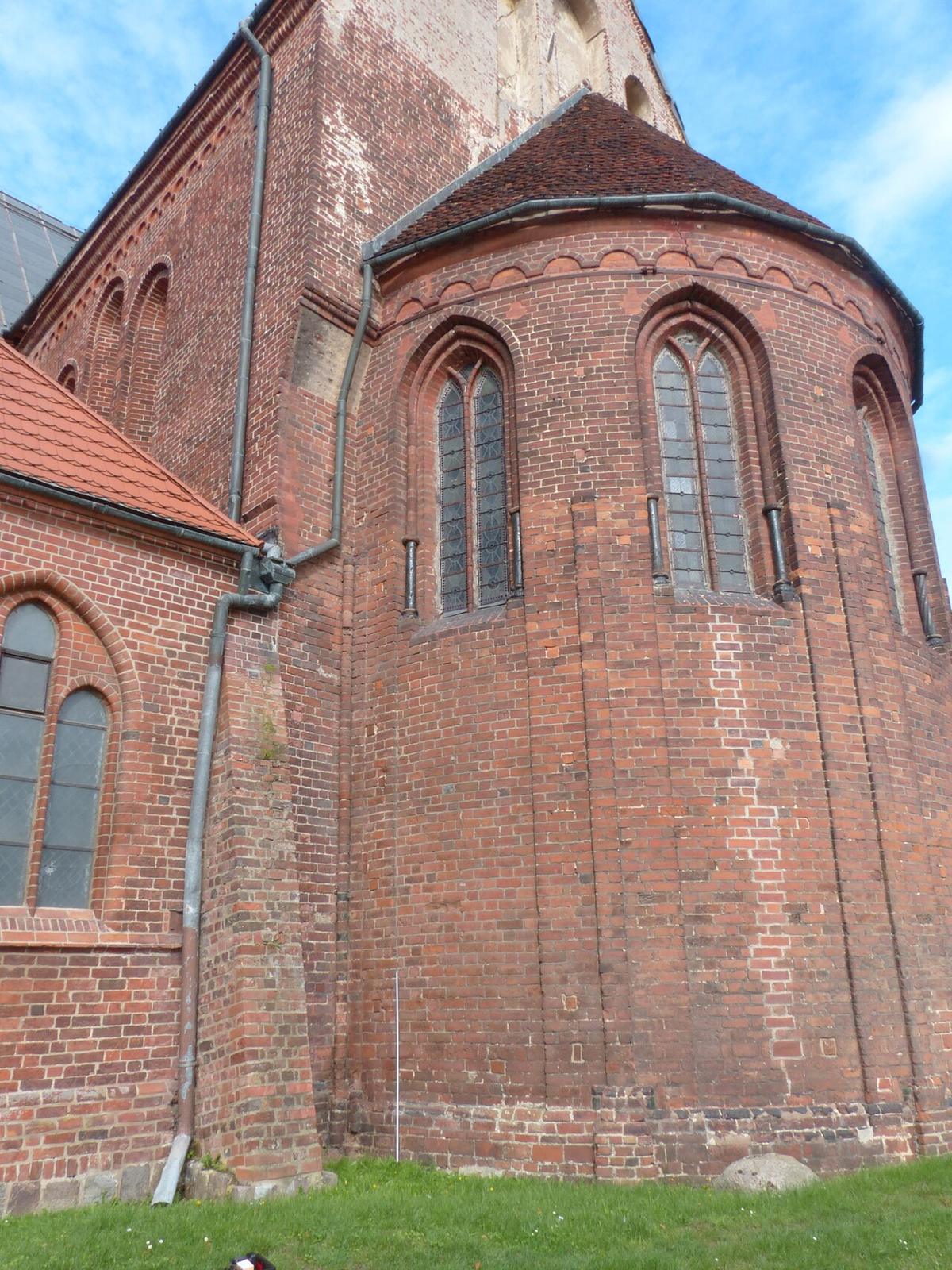
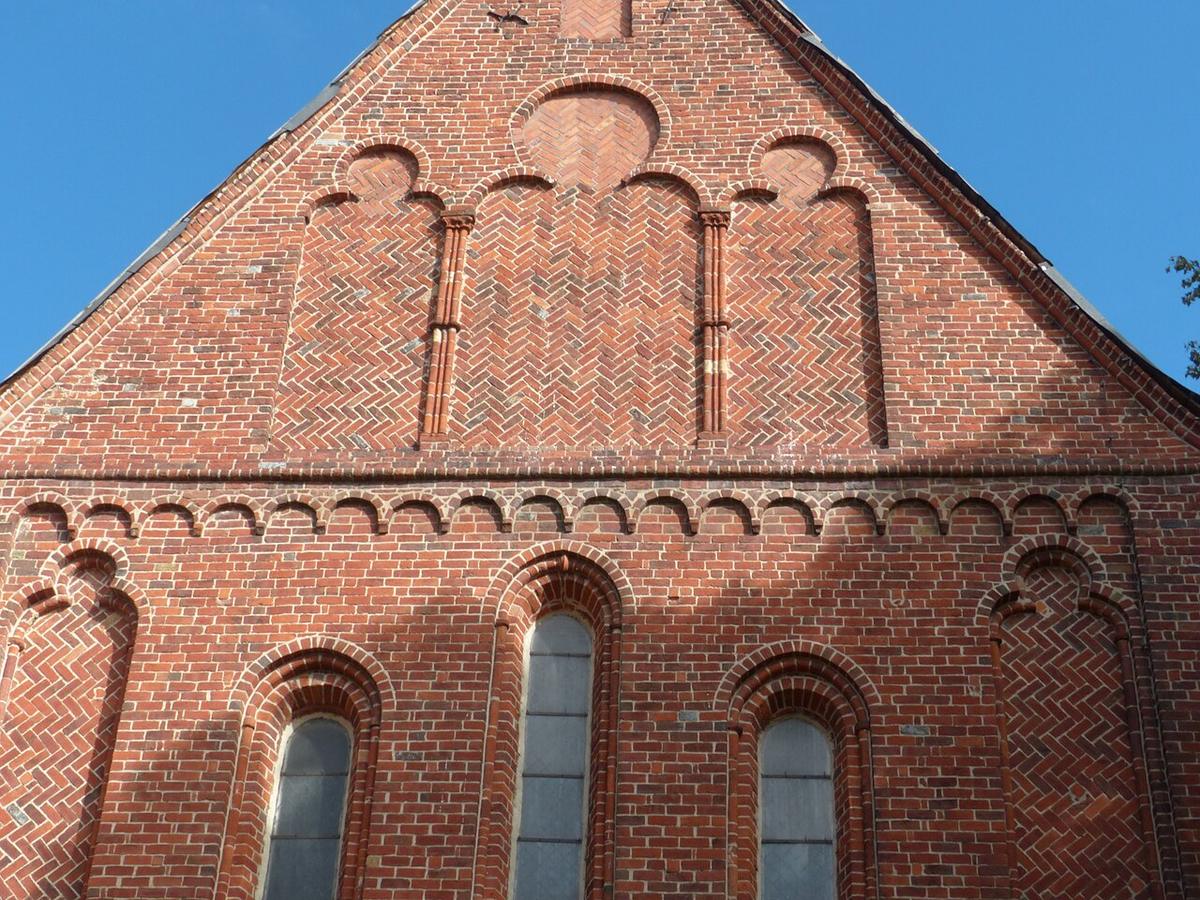
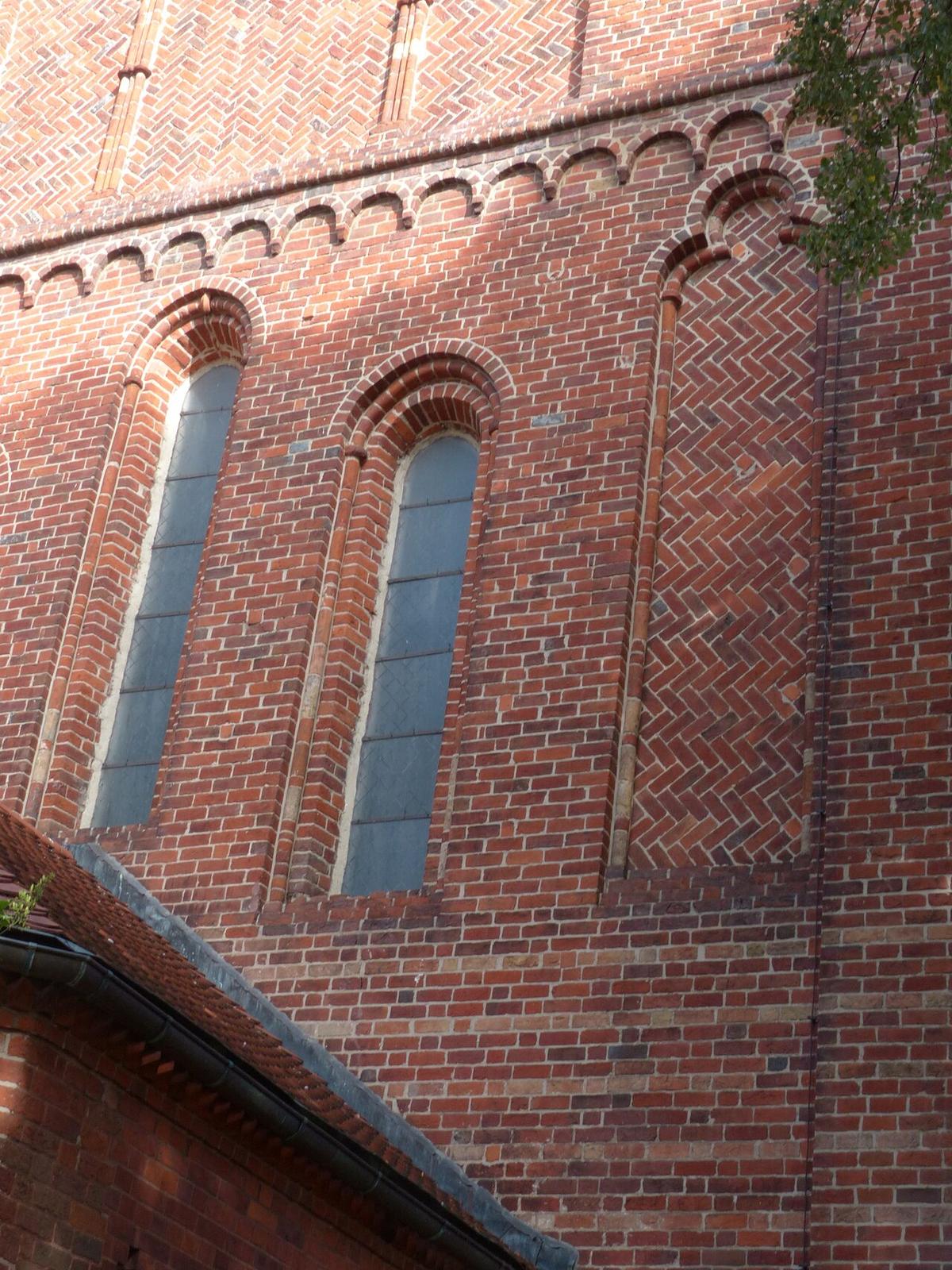
Construction probably began between 1172 and 1176, first in granite blocks and later in brick. Originally it was a Romanesque, three-aisled basilica on a Latin-cross plan, with a transept, a choir and a semicircular apse.
Two building phases: from Romanesque to Gothic
The first phase lasted from the 1170s to the time of Bishop Hermann von Gleichen (1251–1289). The choir, the transept, part of the chancel, the sacristy and the south porch were built in this period. The oldest feature is the 12th-century north portal, while the south portal of 1230–1250, with Romanesque terracotta sculptures depicting the Adoration of the Lamb, is considered the most beautiful.
Work was interrupted twice by Brandenburg raids — in 1273 and in 1308, when troops burned the eastern part of the building. In the 14th and 15th centuries the Gothic nave and aisles were raised on the Romanesque foundations. The vault rests on twelve pillars symbolising the apostles; the south aisle has a star vault, the north aisle a rib vault. Around 1382 the church received its first organ, and in 1410 a brick attic.
A Lutheran cathedral and Baroque furnishings
After the Reformation the church was a Lutheran place of worship until 1945, though it kept its cathedral status, and the chapter continued to exist here until the 19th century. The Thirty Years' War devastated the interior; in the second half of the 17th century, thanks to the last titular Bishop of Kamień, Duke Ernst Bogislaw von Croy, the cathedral received Baroque furnishings and an organ funded in 1669.
In 1848–1850, on the orders of King Frederick William IV of Prussia, a general renovation was carried out under the supervision of the conservator Ferdinand von Quast. In 1858 the king funded stained glass for the five apse windows, which, after reconstruction in 1986, can still be seen today.
The tower and the oldest roof in Poland
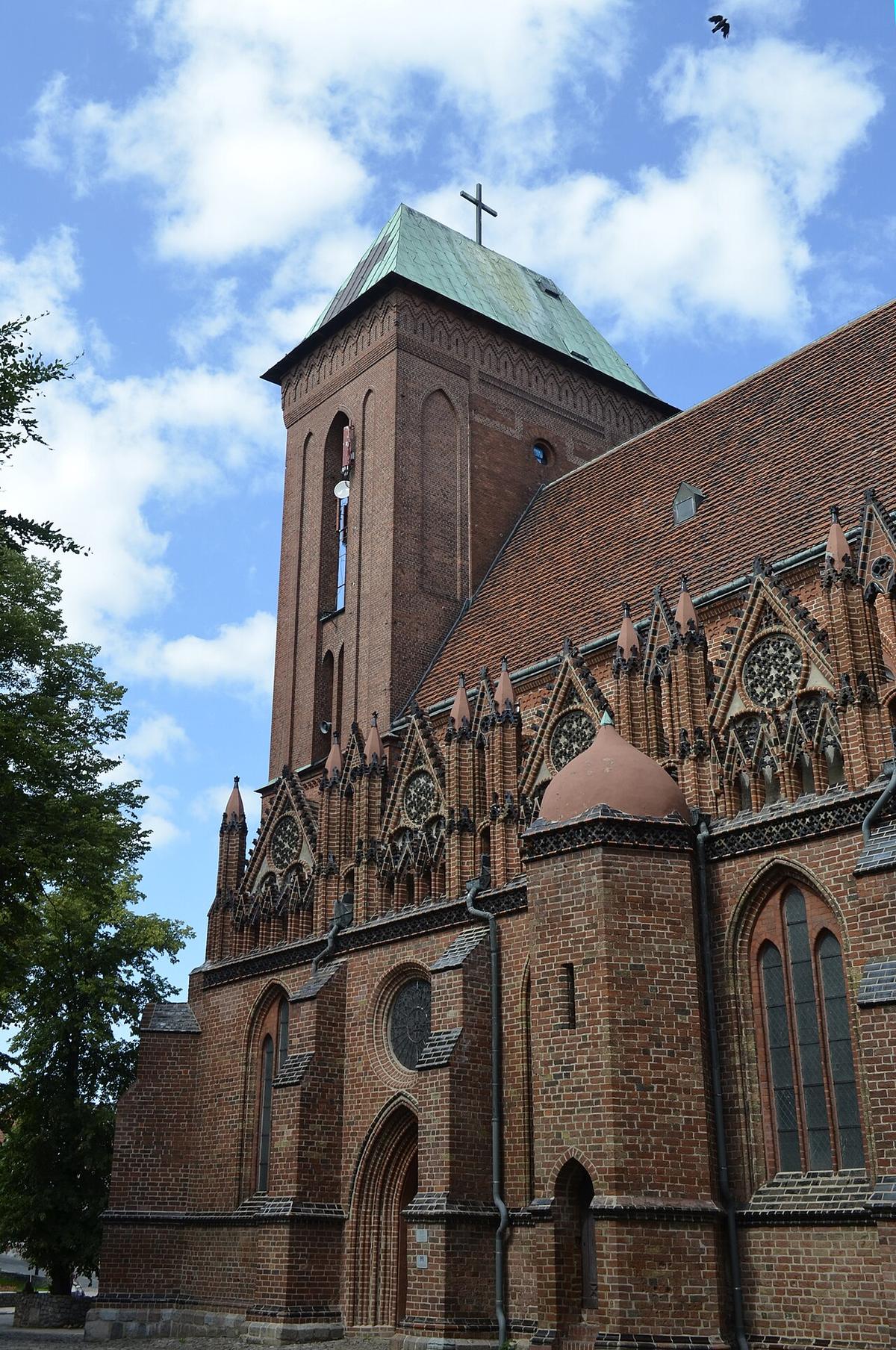
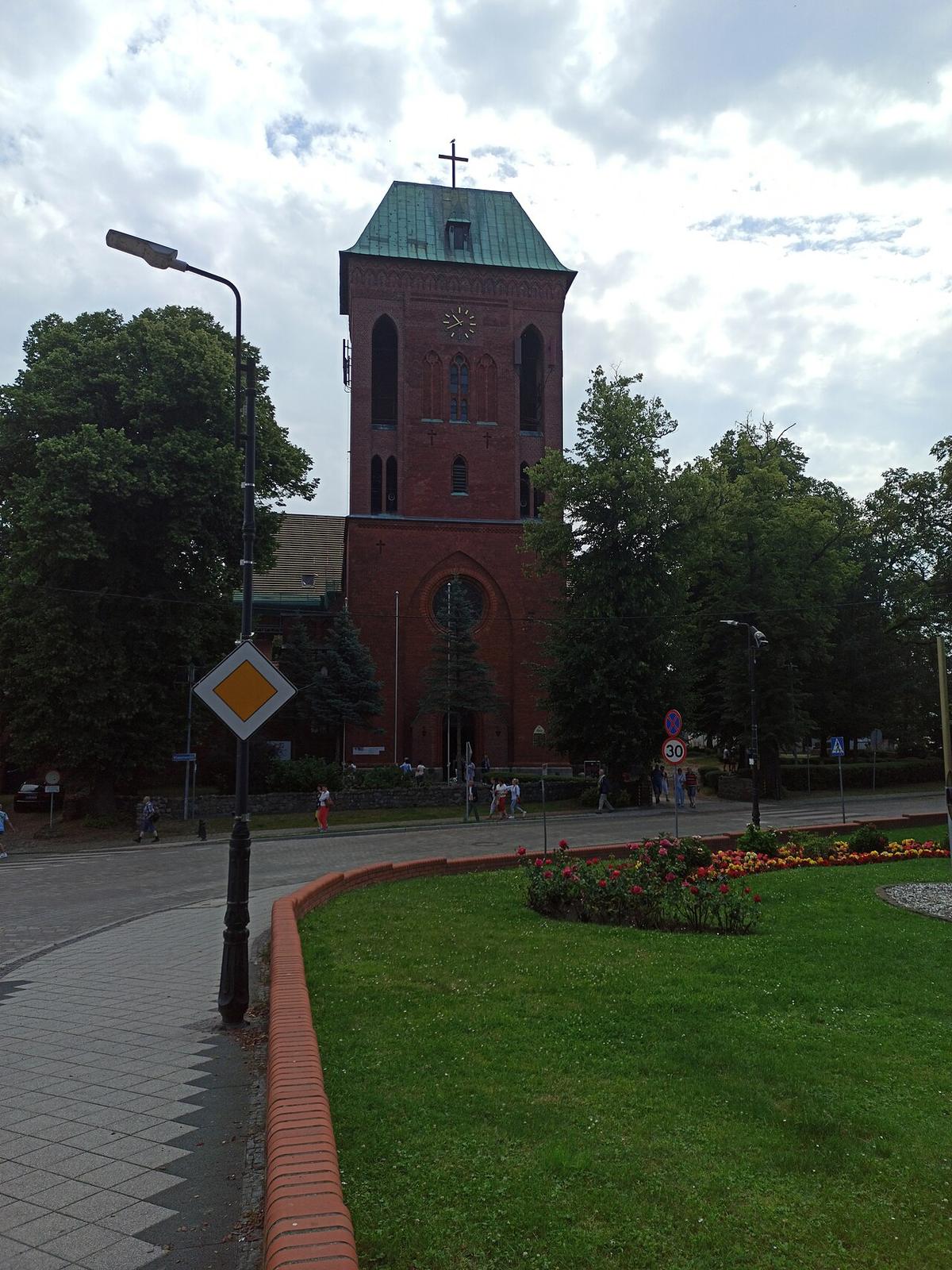
Over its history the cathedral has had four towers. The Gothic one from the 14th century was destroyed in 1630 during the Thirty Years' War; its Baroque successor was dismantled in 1803. The Neo-Gothic tower designed by August Soller was built in 1847–1850 and was given its present form in 1934.
In 2021 it was established that the cathedral has the oldest surviving roof truss in Poland. The oak timber was brought from the island of Wolin — traces of the ropes used to float it are still visible. Analysis of samples points to trees felled in 1260–1268 and 1360–1361, and above the chancel the timber may even date from the first half of the 13th century.
What to see inside
The chancel holds a late Gothic triptych from the turn of the 15th and 16th centuries depicting the Assumption of the Virgin Mary. Also worth noting are the Baroque pulpit of 1682, two paintings from the workshop of Lucas Cranach the Elder dated 1527, and fragments of Romanesque wall paintings in the sacristy, choir and apse, uncovered in the 1960s. Above it all rises the case of the Baroque organ.
After the Second World War the cathedral was taken over by Catholics — it was reconciled on 16 September 1945. Since 1972 it has been a co-cathedral, today of the Archdiocese of Szczecin-Kamień. On 1 September 2005 the cathedral complex was declared a Historic Monument of Poland, and in 2010 the church was raised to the rank of a sanctuary.
Visiting
The co-cathedral is the active church of St Otto's parish — visits are not possible during services. In summer the cathedral hosts the International Festival of Organ and Chamber Music. Current information is available from the parish.
Gallery